MOTS-c
Mitochondrial Open Reading Frame · Mitochondrial Peptide
A mitochondria-derived peptide for metabolic health and longevity
Typical Dose
1–10 mg once every 5 days
Route
Subcutaneous
Frequency
Once every 5 days
Cycle
8–12 weeks
Overview
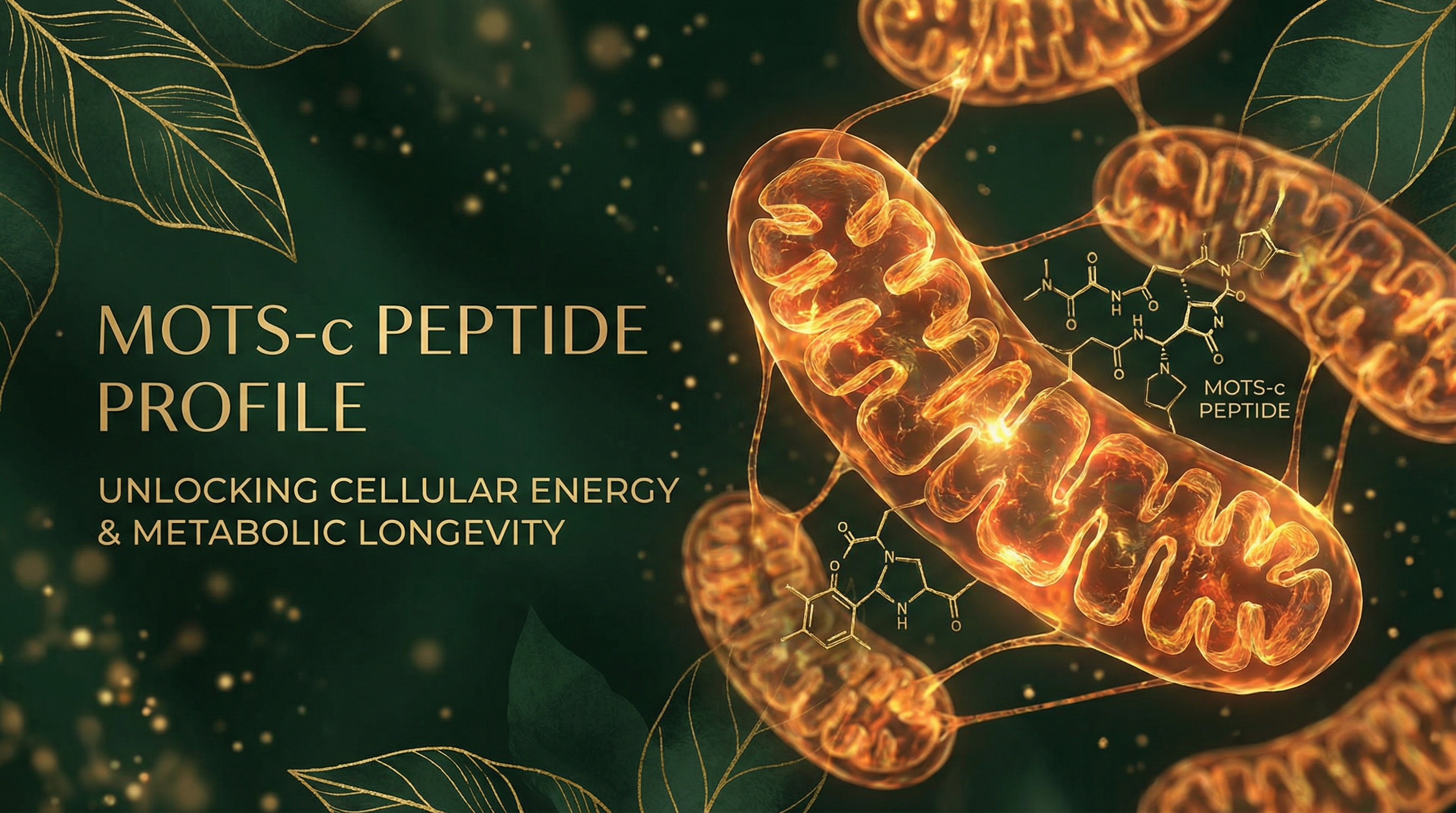
MOTS-c is a fascinating peptide because it comes from a completely unexpected place: your mitochondria. Mitochondria are the energy-producing structures inside your cells — often called the "powerhouses of the cell." It turns out they also produce signaling molecules that communicate with the rest of your body. MOTS-c is one of those signals. It has been shown to improve how your body handles blood sugar, boost exercise endurance, and extend lifespan in animal studies. Researchers are particularly excited about it for healthy aging.
Key Benefits
Mechanism of Action
When your cells are under stress (from exercise, fasting, or aging), MOTS-c travels from the mitochondria to the cell nucleus and flips on a master energy switch called AMPK. Think of AMPK as your body's fuel economy system — it tells cells to burn stored energy more efficiently and stop wasting resources. This improves how your muscles use glucose, reduces inflammation, and makes your cells more resilient to stress. It essentially mimics some of the benefits of exercise and caloric restriction at the cellular level.
Dosing Protocol
Typical Dose
1–10 mg once every 5 days
Dose Range
1–10 mg per dose
Frequency
Once every 5 days
Route
Subcutaneous injection
Cycle Length
8–12 weeks
CLINICAL NOTES
Common dosing ranges from 1–10 mg once every 5 days depending on individual goals and response. Start at the lower end and adjust based on how you feel. Relatively new peptide with limited long-term human data.
Reconstitution Guide
Vial Size
10 mg
BAC Water
1 mL (100 units)
Concentration
10 mg/mL
STEP-BY-STEP INSTRUCTIONS
Remove the caps from the bacteriostatic water (BAC water) and MOTS-c vial and clean both stoppers with alcohol swabs. Draw 100 units (1 mL) of bacteriostatic water into a syringe and inject it into the MOTS-c vial. Swirl gently until fully dissolved — do not shake. The solution is now 10 mg/mL.
DRAW VOLUME REFERENCE
| Dose | Units (U-100) | Volume (mL) |
|---|---|---|
| 1 mg | 10 units | 0.10 mL |
| 2 mg | 20 units | 0.20 mL |
| 3 mg | 30 units | 0.30 mL |
| 5 mg | 50 units | 0.50 mL |
| 10 mg | 100 units | 1.00 mL |
STORAGE
Lyophilized powder: store in a cool, dry place. Once reconstituted: refrigerate and use within 30 days.
Side Effects & Safety
IMPORTANT DISCLAIMER
This information is for educational purposes only. Always consult a qualified healthcare provider before starting any peptide protocol. Individual responses vary and medical supervision is recommended.
Research References
Common Stacks
MOTS-c targets mitochondrial function and metabolic health. It pairs well with other longevity peptides.
A comprehensive longevity stack — MOTS-c for mitochondrial health, Epitalon for telomere support.
Both target mitochondrial function and cellular energy — a powerful combination for metabolic optimization.
SS-31 protects mitochondrial membranes while MOTS-c activates mitochondrial biogenesis — complementary mechanisms.
Frequently Asked Questions
Community Reviews
Real experiences from the Peptide Insights community
Have you used MOTS-c?
Real experiences from real people help others make informed decisions. Share what worked, what didn't, and what you wish you'd known before starting.
Free account required. Your review helps the Peptide Insights community.
No reviews yet for MOTS-c
Be the first to share your experience. Your insight could help someone else decide if MOTS-c is right for them.
Sign In to Be the FirstWant to go deeper on MOTS-c?
Get our free 32-page Beginner's Guide — plain-language breakdowns of the top peptides, dosing essentials, and safety basics.
Free Beginner's Guide
32-page PDF, instant download
Related Peptides
Compounds often researched alongside MOTS-c
Epitalon
A telomere-lengthening peptide for cellular longevity
NAD+
The master coenzyme for cellular energy, DNA repair, and sirtuin-driven longevity
SS-31
A mitochondria-targeting peptide for cellular energy and heart health
Glutathione
The body's master antioxidant for detoxification, immune support, and anti-aging