A Complete Guide to Safe Peptide Storage and Handling
Protect your investment and maintain peptide potency from vial to injection
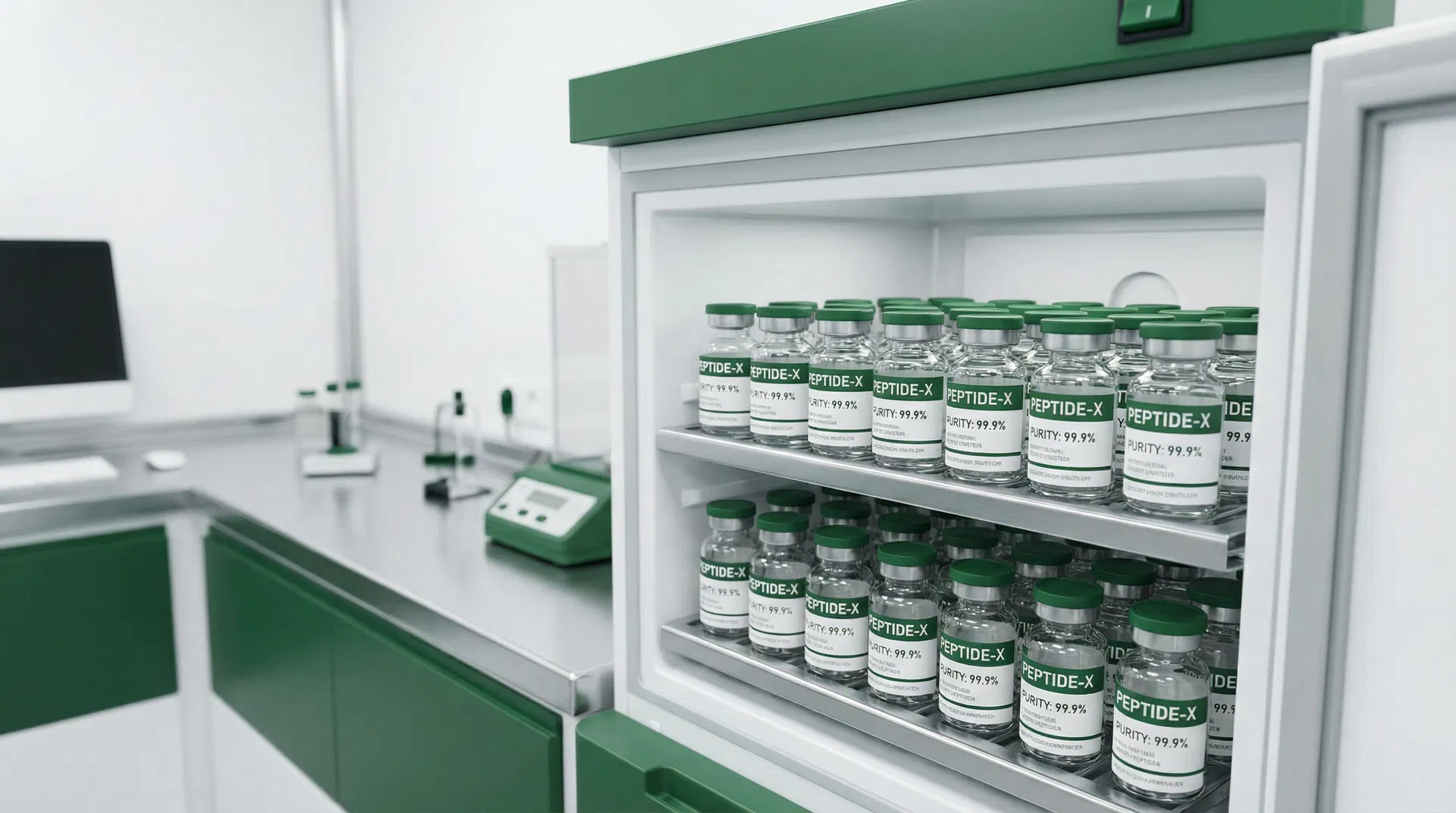
Why Storage Matters More Than You Think
One of the most common reasons peptide protocols fail to produce expected results has nothing to do with the peptide itself — it is improper storage and handling. Peptides are fragile molecules. Heat, light, moisture, and repeated freeze-thaw cycles can all degrade them, sometimes rendering them completely inactive while leaving them visually indistinguishable from a potent vial.
If you are investing time, money, and effort into a peptide protocol, protecting that investment with proper storage practices is non-negotiable.
Lyophilized (Freeze-Dried) Peptides: Before Reconstitution
Most research peptides are sold in lyophilized form — a white powder created by freeze-drying the peptide solution. In this form, peptides are relatively stable but still require careful handling.
Long-term storage (months to years): Store in a freezer at -20°C (-4°F) or colder. Keep vials sealed and away from light. Most lyophilized peptides will remain stable for 2+ years under these conditions.
Short-term storage (weeks to months): Refrigeration at 2–8°C (36–46°F) is acceptable for most peptides for periods of up to 3 months. Keep away from light and moisture.
Room temperature: Generally not recommended for extended periods. Some stable peptides (like BPC-157) can tolerate room temperature for short periods, but this should be minimized.
Reconstitution: The Critical Step
Reconstitution is the process of dissolving the lyophilized peptide powder in a liquid to create an injectable solution. This step requires care and the right materials.
What You Need
- Bacteriostatic water (BAC water) — The preferred diluent for most peptides. Contains 0.9% benzyl alcohol, which prevents bacterial growth and allows the reconstituted solution to be stored for 4–6 weeks in the refrigerator.
- Sterile water — Can be used as an alternative, but the reconstituted solution should be used within 24–48 hours.
- Insulin syringes — 1 mL syringes with 28–31 gauge needles are standard for peptide injection.
- Alcohol swabs — For sterilizing vial tops before drawing.
The Reconstitution Process
Clean the rubber stopper of both the peptide vial and the BAC water vial with an alcohol swab. Draw the desired amount of BAC water into your syringe. Insert the needle into the peptide vial and slowly inject the water down the side of the vial — do not squirt it directly onto the powder, as this can damage the peptide structure. Gently swirl (do not shake) the vial until the powder is fully dissolved. The solution should be clear and colorless.
Never shake a peptide vial. Shaking creates air bubbles and mechanical stress that can denature (unfold and deactivate) the peptide molecules. Always swirl gently.
Reconstituted Peptides: After Reconstitution
Once reconstituted, peptides are significantly more fragile than in lyophilized form. The general guidelines are:
- Store in the refrigerator at 2–8°C at all times
- Keep away from light (store in the original box or wrap in foil)
- Use within 4–6 weeks if reconstituted with BAC water
- Use within 24–48 hours if reconstituted with plain sterile water
- Minimize the number of times you insert a needle into the vial (each insertion is a contamination risk)
Freeze-Thaw Cycles: A Hidden Danger
Repeatedly freezing and thawing a reconstituted peptide solution is one of the fastest ways to degrade it. If you have a large vial and will not use it all within the recommended timeframe, consider dividing it into smaller aliquots immediately after reconstitution and freezing the unused portions. Thaw only what you need for each use.
Signs of Peptide Degradation
Unfortunately, degraded peptides often look identical to potent ones. However, some warning signs include: cloudiness or particulate matter in the solution (which may indicate contamination or precipitation), unusual color (most peptides should be colorless to very slightly yellow), and — most practically — lack of expected effects after a properly conducted protocol.
The Bottom Line
Proper storage and handling is one of the highest-leverage things you can do to ensure your peptide protocol works as intended. The practices described here take only a few extra minutes but can mean the difference between an effective protocol and an expensive disappointment.
David Steel
Entrepreneur, Mentor & Peptide Advocate
David Steel is an entrepreneur, mentor, and health optimization advocate. He founded Peptide Insights to bring research-backed, plain-language education to the growing world of peptide science. He is passionate about longevity, clean energy, and empowering people to make informed health decisions.
Comments
Sign in to join the conversation
Sign In / RegisterNo comments yet. Be the first to share your thoughts!