Educational Use Only
Please read before exploring Peptide Insights
Important: The information on this website is intended for educational and research purposes only.
Peptide Insights provides information about peptides based on published scientific research and clinical literature. This content is designed to help you understand the science, not to guide personal medical decisions.
By continuing, you confirm that you are accessing this information for educational purposes and understand that it does not constitute medical advice.
GLOW vs. KLOW: Which Peptide Blend Is Right for You?
Both blends share the same healing foundation. One is built for your skin. The other is built for your immune system. Here is how to choose.
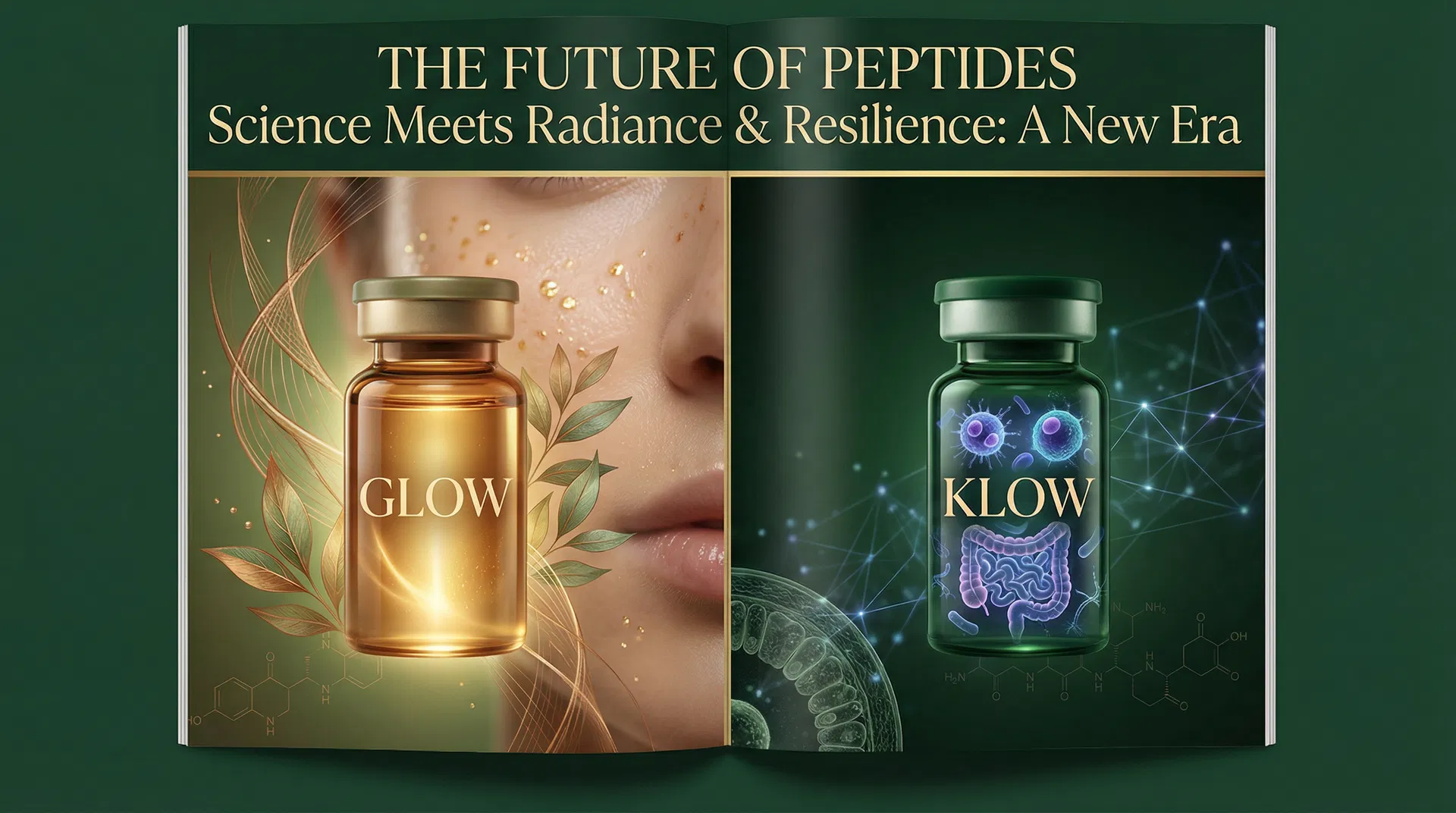
So you've heard about GLOW and KLOW. Both are peptide blends. Both contain BPC-157 and TB-500. Both are popular in the recovery and anti-aging world. And both have names that sound like they belong on a skincare shelf at a high-end spa.
But here's the thing: they are not the same. Not even close. One is built for your skin, your hair, and looking younger. The other is built for your immune system, your gut, and healing from the inside out.
Which one is right for you? Let's figure that out together.
First, What Are Peptide Blends?
A peptide blend is exactly what it sounds like: two or more individual peptides combined into a single protocol. Instead of injecting three separate compounds on three separate schedules, you get them together, working synergistically at the same time.
The idea is that certain peptides amplify each other. BPC-157 repairs tissue locally. TB-500 helps repair cells migrate to the injury site. GHK-Cu signals your genes to produce more collagen. When you combine them, the sum is greater than the parts.
Both GLOW and KLOW are built on that same foundation. The difference is what each blend adds on top of it.
Meet GLOW: The Anti-Aging, Skin-First Blend
GLOW is a 3-peptide blend: GHK-Cu + BPC-157 + TB-500.
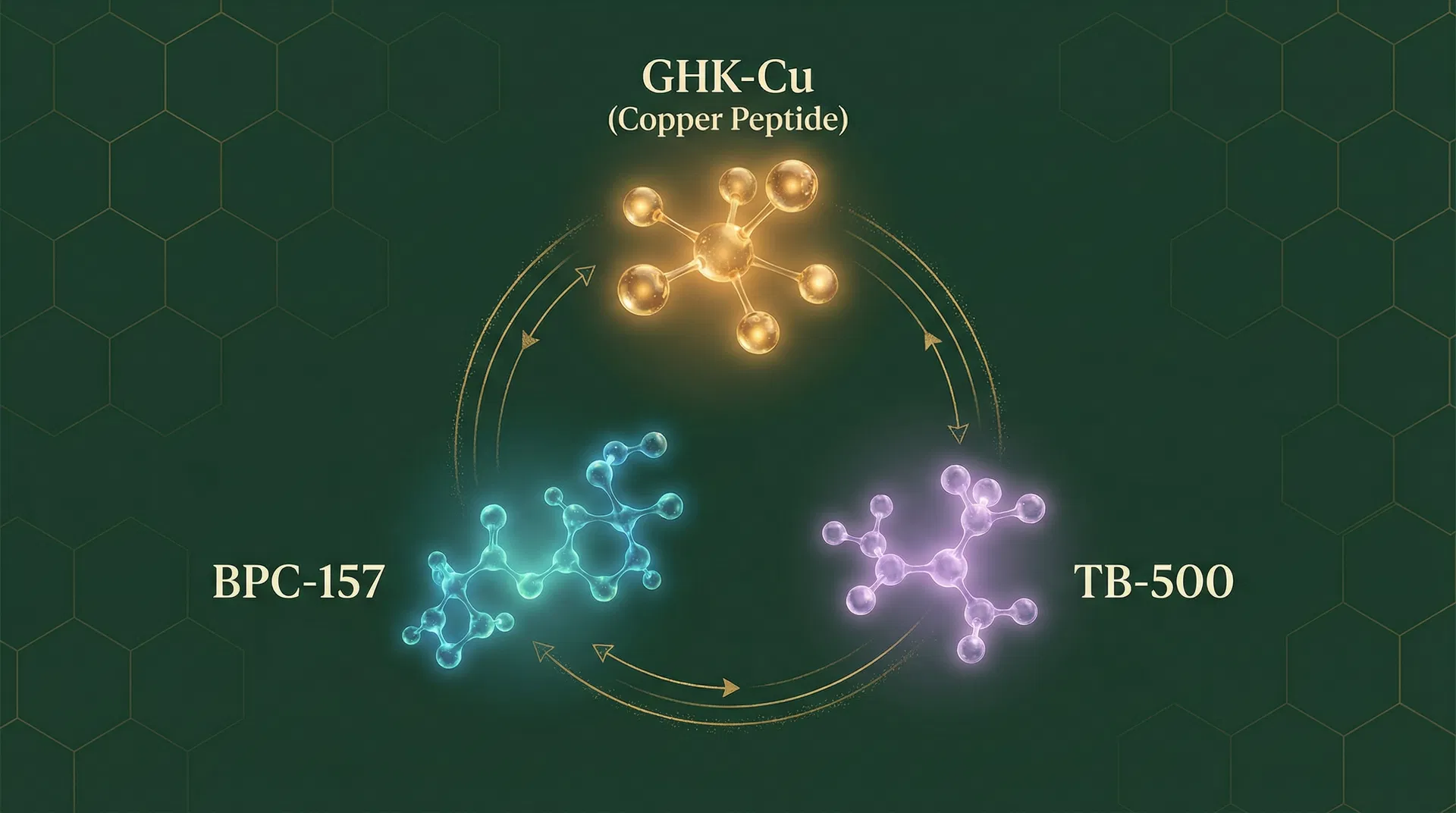
The star of the show is GHK-Cu, also known as copper peptide. This tiny tripeptide (glycine-histidine-lysine bound to copper) has been studied since the 1970s and has a remarkable ability to activate over 4,000 genes involved in skin repair, collagen synthesis, and anti-inflammatory signaling. Think of it as a master switch for cellular youth.
Here is what GHK-Cu actually does in your body:
- Stimulates collagen and elastin production, making skin firmer and more elastic
- Activates antioxidant enzymes that protect skin cells from damage
- Reduces fine lines and wrinkles by rebuilding the structural proteins your skin loses with age
- Improves hair follicle health, leading to thicker, more vital hair
- Speeds up wound healing and reduces scar formation
BPC-157 and TB-500 round out the GLOW stack by handling the tissue repair and recovery side. BPC-157 promotes new blood vessel formation (angiogenesis) and accelerates healing in tendons, ligaments, and muscles. TB-500 improves cell migration so repair cells can reach damaged areas faster. Together, they give you whole-body recovery on top of the skin and hair benefits from GHK-Cu.
"GHK-Cu activates over 4,000 human genes. Many of these are involved in the very processes that slow down as we age: collagen synthesis, antioxidant defense, and tissue repair." — Pickart & Margolina, 2018
Who is GLOW for? People whose primary goals are skin quality, hair vitality, and looking and feeling younger, while also wanting the recovery benefits of BPC-157 and TB-500. If you are dealing with fine lines, skin laxity, thinning hair, or just want a comprehensive anti-aging protocol, GLOW is your blend.
Meet KLOW: The Immune-First, Gut-Healing Blend
KLOW is a 4-peptide blend: GHK-Cu + KPV + BPC-157 + TB-500.
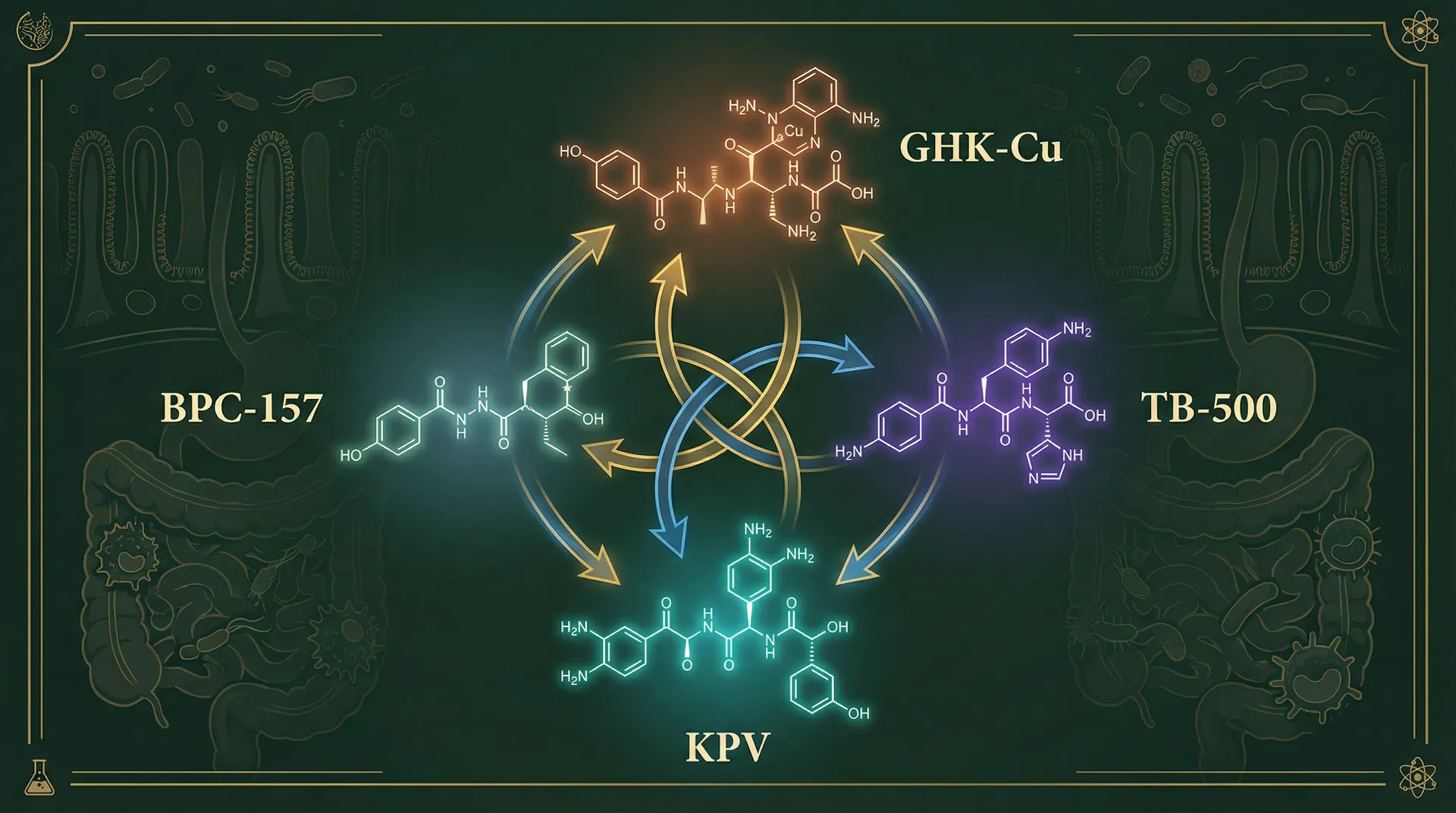
KLOW takes everything in GLOW and adds one powerful ingredient: KPV. That single addition changes the entire character of the blend.
KPV is a tripeptide derived from alpha-MSH (alpha-melanocyte-stimulating hormone), specifically the last three amino acids: lysine-proline-valine. It is one of the most potent anti-inflammatory peptides ever studied, and it has a unique ability to modulate the immune system rather than simply suppress it.
Here is what makes KPV special:
- Acts on melanocortin receptors (MC1R and MC3R) in immune cells to suppress pro-inflammatory cytokines like TNF-alpha, IL-6, and IL-1beta
- Reduces gut inflammation and supports healing of the intestinal lining, making it particularly effective for IBD, Crohn's disease, and colitis
- Crosses the gut barrier when taken orally, meaning it can be used as a capsule for GI-specific conditions
- Modulates immune function without broadly suppressing it, which is important for people who cannot afford to be immunocompromised
- Reduces skin inflammation linked to immune dysregulation (eczema, psoriasis, rosacea)
"KPV significantly reduced colitis severity in animal models, decreasing mucosal damage and inflammatory cytokine levels. Its ability to act directly on gut epithelium makes it uniquely suited for inflammatory bowel conditions." — Dalmasso et al., 2008
Who is KLOW for? People dealing with chronic inflammation, gut issues (IBD, Crohn's, leaky gut, colitis), immune dysregulation, or autoimmune-adjacent conditions. KLOW is also a strong choice for anyone who wants the full recovery and anti-aging benefits of GLOW but has an underlying inflammatory or immune challenge that needs to be addressed at the same time.
Side-by-Side: How Do They Actually Compare?
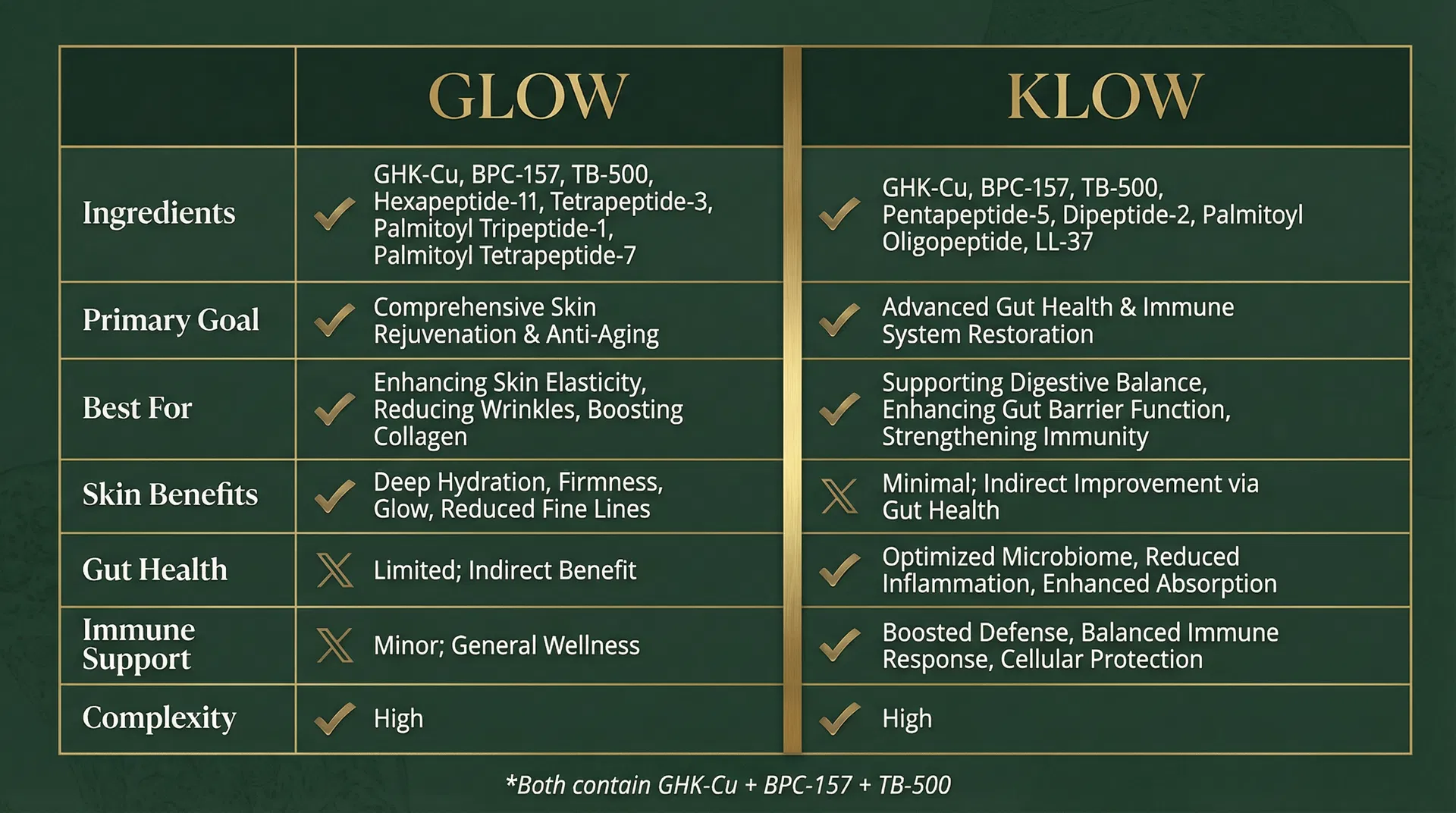
| GLOW | KLOW | |
|---|---|---|
| Peptides | GHK-Cu + BPC-157 + TB-500 | GHK-Cu + KPV + BPC-157 + TB-500 |
| Primary Goal | Anti-aging, skin & hair rejuvenation | Immune modulation, gut healing, inflammation control |
| Skin Benefits | Strong (collagen, elastin, fine lines, firmness) | Strong (same GHK-Cu benefits + immune skin conditions) |
| Gut Health | Indirect (via BPC-157 anti-inflammatory effects) | Direct and strong (KPV targets gut epithelium) |
| Immune Support | General anti-inflammatory | Targeted immune modulation via melanocortin receptors |
| Tissue Repair | Strong (BPC-157 + TB-500) | Strong (same BPC-157 + TB-500) |
| Oral Use Option | No (injectable only) | Yes (KPV can be taken orally for GI targeting) |
| Typical Cycle | 8–12 weeks on, 4 weeks off | 8–12 weeks on, 4 weeks off |
| Best For | Anti-aging, aesthetic goals, general recovery | Chronic inflammation, gut issues, immune dysregulation |
The Shared Foundation: Why BPC-157 + TB-500 Matter in Both
Both GLOW and KLOW contain BPC-157 and TB-500, and it is worth understanding why this combination is so foundational.
BPC-157 (Body Protection Compound 157) is a synthetic peptide derived from a protein found in human gastric juice. It promotes angiogenesis (new blood vessel formation), upregulates growth hormone receptors in tendons and connective tissue, and modulates nitric oxide production to reduce inflammation. It is one of the most studied healing peptides in existence, with hundreds of animal studies showing benefits for tendon repair, gut healing, muscle recovery, and even brain health.
TB-500 (Thymosin Beta-4) is a naturally occurring peptide that promotes cell migration and proliferation by upregulating actin, a protein involved in cell movement. When you are injured, your body needs repair cells to travel to the damaged area. TB-500 makes that process faster and more efficient. It also has systemic anti-inflammatory effects and has been studied for cardiac repair, wound healing, and neurological recovery.
Together, BPC-157 and TB-500 form what many practitioners call the "Wolverine Stack" — a reference to the Marvel character's legendary healing ability. Adding GHK-Cu (in GLOW) or GHK-Cu plus KPV (in KLOW) builds on top of this foundation to target specific goals.
Dosing: What Does a Typical Protocol Look Like?
Both blends follow a similar dosing structure. Here is a general framework — always work with a healthcare provider to dial in your specific protocol.
| Component | Typical Dose | Frequency |
|---|---|---|
| GHK-Cu | 1–2 mg | 3–5x per week (loading), 2–3x (maintenance) |
| BPC-157 | 500 mcg – 1 mg | 3–5x per week (loading), 2–3x (maintenance) |
| TB-500 | 2.5 mg | 3–5x per week (loading), 2–3x (maintenance) |
| KPV (KLOW only) | 500 mcg – 1 mg (injectable) or 1–2 mg (oral) | 3–5x per week (loading), 2–3x (maintenance) |
A typical loading phase runs 4 weeks at higher frequency, followed by a maintenance phase for the remainder of the 8–12 week cycle. Most practitioners recommend a 4-week break between cycles to prevent receptor desensitization and allow your body to consolidate the gains.
Want to calculate your exact draw amount for a GLOW or KLOW vial? Use the Reconstitution Calculator on this site — it handles the math for you.
Timeline: When Will You Notice Results?
One of the most common questions is: how long does this take to work? Here is a realistic timeline based on the research and practitioner experience.
| Timeframe | GLOW | KLOW |
|---|---|---|
| Week 1–2 | Improved energy, reduced inflammation, better sleep | Reduced gut discomfort, anti-inflammatory effects from KPV |
| Week 3–4 | Improved skin texture and hydration, faster recovery | Noticeable reduction in chronic inflammation, improved gut function |
| Week 6–8 | Visible reduction in fine lines, firmer skin, improved hair quality | Skin improvements from GHK-Cu, continued gut and immune benefits |
| Week 10–12 | Hair thickness improvements, cumulative collagen benefits | Full gut healing assessment, cumulative immune and skin benefits |
Can You Run GLOW and KLOW Together?
Technically, yes — but it is not typically necessary or recommended as a starting point. Since KLOW already contains everything in GLOW (GHK-Cu + BPC-157 + TB-500) plus KPV, running both simultaneously would mean doubling up on three of the four compounds. That is not inherently dangerous, but it adds cost and complexity without a clear benefit.
A more practical approach: start with GLOW if your goals are primarily aesthetic and recovery-focused. If you find you need more immune and gut support, transition to KLOW for your next cycle. Some practitioners use KLOW for the first cycle to address underlying inflammation, then switch to GLOW for maintenance once the immune picture has stabilized.
Important Safety Notes
Neither GLOW nor KLOW is an FDA-approved drug. Both are sold as research compounds (Research Use Only) by compounding pharmacies and research suppliers. This means:
- Always work with a knowledgeable healthcare provider before starting either blend
- If you are on immunosuppressant medications, discuss KPV specifically with your prescribing physician before starting KLOW
- Source only from suppliers who provide third-party testing and certificates of analysis (COAs)
- Monitor for side effects, particularly mole or skin pigmentation changes (rare but worth watching with GHK-Cu)
- Cycle appropriately: 8–12 weeks on, 4 weeks off
The Bottom Line: Which One Should You Choose?
Here is the honest answer: it depends on what you are trying to fix.
Choose GLOW if your primary goals are skin quality, hair vitality, and anti-aging, and you want the recovery benefits of BPC-157 and TB-500 alongside them. GLOW is the more focused, aesthetics-forward blend.
Choose KLOW if you have chronic inflammation, gut issues (IBD, Crohn's, leaky gut, colitis), immune dysregulation, or autoimmune-adjacent conditions on top of your recovery and aesthetic goals. KLOW is the more comprehensive, therapeutically powerful blend.
Both are excellent. Both are built on a proven foundation. The question is just which layer you need on top.
Want to explore the individual peptides in more detail? Check out the full library pages for GLOW and KLOW, or use the Reconstitution Calculator to set up your protocol before your first vial arrives.
References
- Pickart L, Margolina A. Regenerative and Protective Actions of the GHK-Cu Peptide in the Light of the New Gene Data. Int J Mol Sci. 2018;19(7):1987. PubMed
- Pickart L, Vasquez-Soltero JM, Margolina A. GHK Peptide as a Natural Modulator of Multiple Cellular Pathways in Skin Regeneration. Biomed Res Int. 2015;2015:648108. PubMed
- Sikiric P, et al. Brain-gut Axis and Pentadecapeptide BPC 157: Theoretical and Practical Implications. Curr Neuropharmacol. 2016;14(8):857–865. PubMed
- Goldstein AL, Kleinman HK. Advances in the basic and clinical applications of thymosin beta-4. Expert Opin Biol Ther. 2015;15(Suppl 1):S139–S145. PubMed
- Dalmasso G, et al. The peptide KPV inhibits NF-kappaB and MAPK pathways and controls gut inflammation. Lab Invest. 2008;88(3):236–245. PubMed
- Brzoska T, et al. Alpha-melanocyte-stimulating hormone and related tripeptides: biochemistry, antiinflammatory and protective effects in vitro and in vivo. Endocr Rev. 2008;29(5):581–602. PubMed
David Steel
Entrepreneur, Mentor & Peptide Advocate
David Steel is an entrepreneur, mentor, and health optimization advocate. He founded Peptide Insights to bring research-backed, plain-language education to the growing world of peptide science. He is passionate about longevity, clean energy, and empowering people to make informed health decisions.
Comments
Sign in to join the conversation
Sign In / RegisterNo comments yet. Be the first to share your thoughts!