BPC-157 vs. TB-500: Which Peptide is Right for Your Recovery?
A head-to-head comparison of the two most studied healing peptides
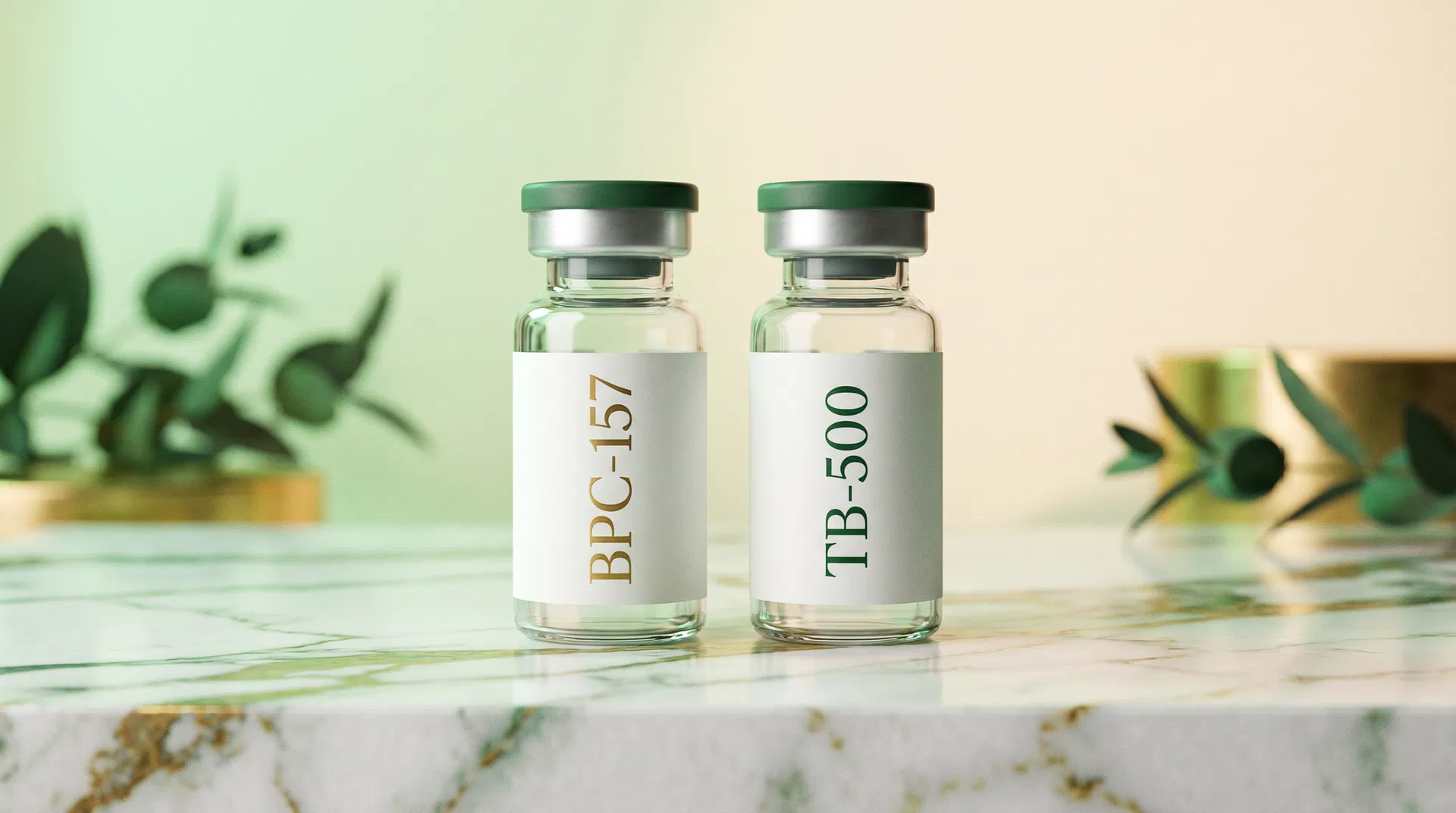
The Two Healing Giants
If you have spent any time researching peptides for recovery, you have almost certainly encountered BPC-157 and TB-500. These two compounds dominate conversations about tissue repair, injury recovery, and systemic healing — and for good reason. Both have impressive preclinical track records, both are widely used in the biohacking and sports medicine communities, and both work through mechanisms that are genuinely fascinating from a biological standpoint.
But they are not the same peptide, and they are not interchangeable. Understanding the differences between them is the key to choosing the right one for your specific situation — or deciding whether to use both together.
What is BPC-157?
BPC-157 stands for Body Protection Compound-157. It is a synthetic pentadecapeptide (15 amino acids) derived from a protective protein found naturally in human gastric juice. This origin is significant: the body already produces a version of this compound to protect the gut lining, which helps explain its remarkable safety profile in research.
BPC-157 works primarily through the upregulation of growth hormone receptors in tendon fibroblasts and by promoting angiogenesis — the formation of new blood vessels. This dual mechanism makes it exceptionally effective for healing tendons, ligaments, and muscles. It also has a well-documented effect on the gut-brain axis, making it one of the few peptides with both structural healing and neurological benefits.
BPC-157 is particularly effective for localized injuries. If you have a specific tendon, ligament, or joint issue, this is often the first peptide to reach for.
What is TB-500?
TB-500 is a synthetic fragment of Thymosin Beta-4, a naturally occurring protein found in virtually every cell in the human body. Thymosin Beta-4 plays a critical role in cell migration, differentiation, and tissue repair. TB-500 specifically contains the active sequence responsible for most of these effects.
Where BPC-157 tends to act locally, TB-500 is a systemic healer. It promotes the upregulation of actin — a protein essential for cell movement and structure — which allows it to accelerate healing throughout the entire body simultaneously. It also has notable anti-inflammatory properties and has been studied for its effects on cardiac tissue repair, making it unique among healing peptides.
Key Differences at a Glance
| Feature | BPC-157 | TB-500 |
|---|---|---|
| Primary mechanism | GH receptor upregulation, angiogenesis | Actin upregulation, cell migration |
| Healing scope | Localized (tendons, gut, ligaments) | Systemic (whole-body) |
| Anti-inflammatory | Moderate | Strong |
| Gut health benefits | Yes (significant) | Minimal |
| Cardiac tissue repair | Limited evidence | Yes (studied) |
| Typical dose | 250–500 mcg/day | 2–2.5 mg twice per week |
| Research status | Preclinical (extensive) | Preclinical (extensive) |
When to Choose BPC-157
BPC-157 is the better choice when you are dealing with a specific, localized injury. Torn tendons, ligament sprains, muscle tears, and gut issues (including leaky gut, IBS, and inflammatory bowel conditions) all respond well to BPC-157. Its ability to upregulate growth hormone receptors directly at the site of injury means it can accelerate healing in ways that systemic approaches cannot match for localized damage.
It is also the preferred option if you have any gut-related issues alongside your injury, since it works on both simultaneously. Oral administration is possible for gut-specific applications, though subcutaneous injection is more effective for musculoskeletal injuries.
When to Choose TB-500
TB-500 shines when the injury is diffuse, when you are dealing with chronic inflammation throughout the body, or when you want systemic recovery support. Athletes who train hard across multiple muscle groups, people recovering from surgery, or anyone dealing with widespread joint pain and stiffness tend to respond better to TB-500.
Its strong anti-inflammatory effect also makes it valuable for autoimmune-adjacent conditions where systemic inflammation is the primary driver of symptoms.
The Case for Stacking Both
Many experienced users combine BPC-157 and TB-500 into what is sometimes called the "Wolverine Stack" — a reference to the Marvel character's legendary healing ability. The logic is sound: BPC-157 handles the localized, targeted repair while TB-500 addresses systemic inflammation and whole-body recovery. The two mechanisms are complementary rather than redundant.
A common protocol for this stack is BPC-157 at 250–500 mcg per day via subcutaneous injection near the injury site, combined with TB-500 at 2 mg twice per week via subcutaneous injection anywhere on the body. Most users run this for 4–8 weeks.
Safety Considerations
Both peptides have favorable safety profiles in preclinical research, with no significant adverse effects reported at therapeutic doses. Neither is FDA-approved for human use, and both are classified as research chemicals. As with any peptide protocol, working with a knowledgeable healthcare provider is strongly recommended.
The Bottom Line
If you have a specific injury, start with BPC-157. If you need systemic recovery support or have widespread inflammation, lean toward TB-500. If you want the most comprehensive healing protocol available, consider combining both. The science supports all three approaches — and the anecdotal evidence from thousands of users is remarkably consistent with the preclinical data.
David Steel
Entrepreneur, Mentor & Peptide Advocate
David Steel is an entrepreneur, mentor, and health optimization advocate. He founded Peptide Insights to bring research-backed, plain-language education to the growing world of peptide science. He is passionate about longevity, clean energy, and empowering people to make informed health decisions.
Comments
Sign in to join the conversation
Sign In / RegisterNo comments yet. Be the first to share your thoughts!