What Are Peptides? A Plain-Language Guide for Beginners
Everything you need to know before exploring peptide therapy
Let's Start at the Beginning
You have probably heard the word "peptide" thrown around in health and fitness circles, in skincare ads, and increasingly in conversations about longevity and biohacking. But what actually is a peptide? And why are so many people — from elite athletes to longevity researchers to everyday health-conscious individuals — paying close attention to them?
Let's break it down in plain language, starting from the very basics.
Peptides Are Everywhere in Your Body
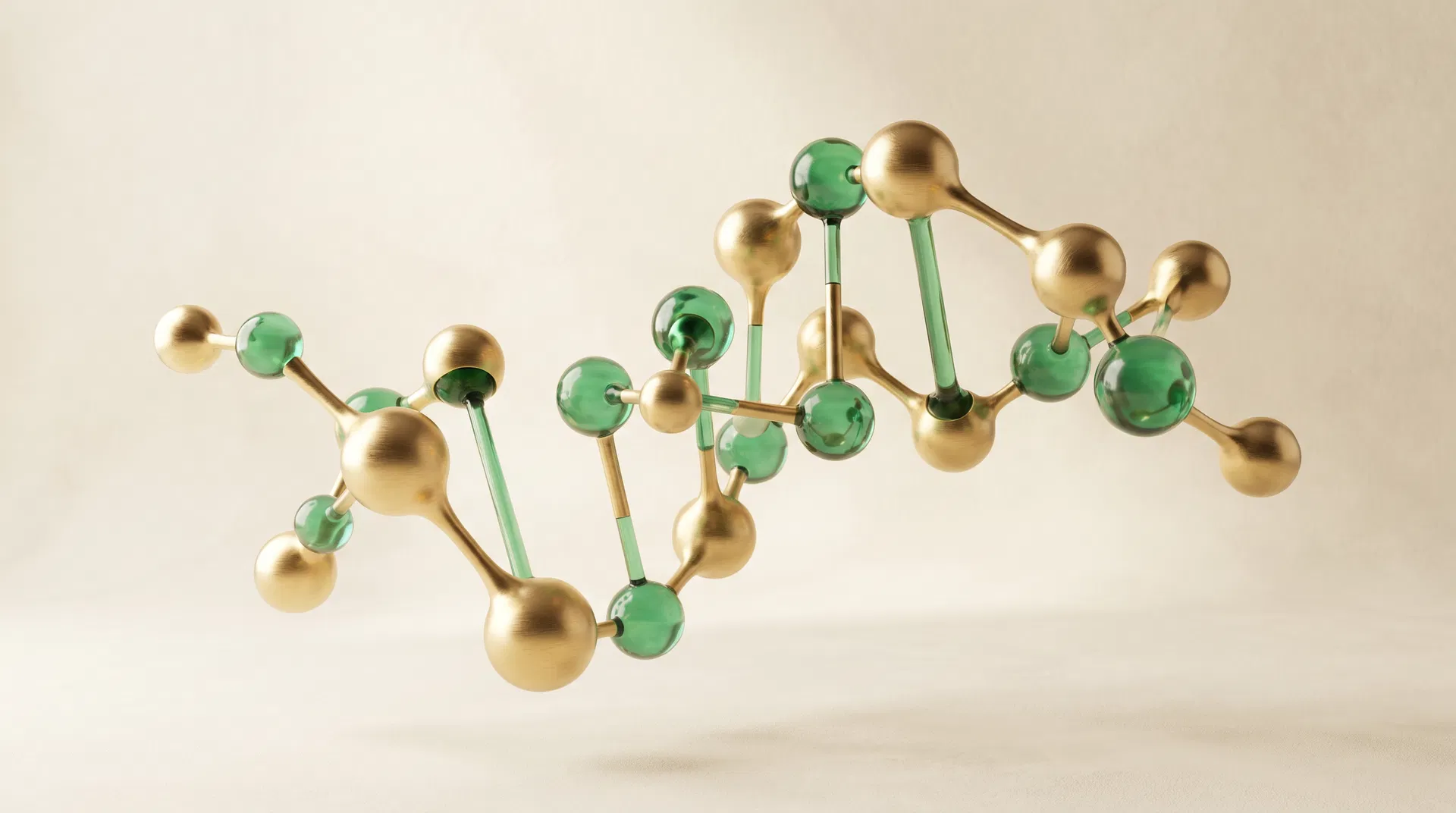
A peptide is simply a short chain of amino acids. Amino acids are the building blocks of proteins, and when you link a small number of them together (typically between 2 and 50), you get a peptide. Link more than 50 together and you have a protein.
Your body already produces thousands of different peptides naturally. Insulin is a peptide. Oxytocin — the "bonding hormone" — is a peptide. The hormones that tell your pituitary gland to release growth hormone are peptides. They are not exotic foreign substances; they are the signaling molecules your body uses to communicate between cells, tissues, and organs.
Think of peptides as text messages your body sends to itself. Each one carries a specific instruction: "repair this tissue," "release more growth hormone," "reduce inflammation here."
What Makes Therapeutic Peptides Different?
When people talk about "peptide therapy" or "research peptides," they are usually referring to synthetic versions of naturally occurring peptides — or modified analogs designed to be more stable, more potent, or more targeted than the originals.
The key insight is this: because these compounds mimic signals your body already uses, they tend to work with your biology rather than overriding it. This is fundamentally different from many pharmaceutical drugs, which often block or force biological processes. Peptides, in most cases, are more like reminders or amplifiers of processes your body already knows how to do.
How Are Peptides Administered?
Most therapeutic peptides are administered via subcutaneous injection — a small needle inserted just under the skin, similar to how diabetics inject insulin. This is because peptides are made of amino acids, and if you swallow them, your digestive system will simply break them down into individual amino acids before they can reach their target.
Some peptides can be administered as nasal sprays (Semax, Selank), as oral troches that dissolve under the tongue, or as topical creams (GHK-Cu for skin). The route of administration matters significantly for bioavailability and effect.
The Seven Major Categories
At Peptide Insights, we organize peptides into seven goal-based categories to make navigation easier:
- Healing & Recovery — BPC-157, TB-500, GHK-Cu for tissue repair and injury recovery
- Fat Loss & Metabolism — Semaglutide, Tesamorelin, AOD-9604 for weight management
- Longevity & Anti-Aging — Epitalon, MOTS-c, SS-31 for cellular health and lifespan
- Cognitive Enhancement — Semax, Selank, Pinealon for brain performance
- Muscle Growth & Performance — CJC-1295, Ipamorelin, Sermorelin for GH optimization
- Sexual Health — PT-141, Oxytocin for libido and intimacy
- Immune Support — Thymosin Alpha-1, LL-37 for immune modulation
Are Peptides Safe?
This is the most important question, and it deserves an honest answer. Most therapeutic peptides have favorable safety profiles in preclinical research, with relatively few serious adverse effects reported at typical doses. However, the vast majority are not FDA-approved for human use and are classified as research chemicals.
This means they exist in a regulatory gray area. They are not illegal to possess in most jurisdictions, but they are not approved medications either. Quality control varies enormously between suppliers, and the research, while often promising, is mostly preclinical (animal studies) rather than large-scale human clinical trials.
The responsible approach is to treat peptides as what they are: promising but not fully validated compounds that should be explored with appropriate caution, ideally under the guidance of a healthcare provider familiar with peptide therapy.
Where to Start
If you are new to peptides and want to explore further, here is a practical starting point. Read the individual peptide profiles on this site carefully, paying attention to the mechanism of action, dosing protocols, and safety sections. Cross-reference the research citations with PubMed. And if you decide to explore peptide therapy, work with a knowledgeable provider who can help you design a protocol appropriate for your specific goals and health status.
The peptide space is genuinely exciting, and the science is advancing rapidly. Approaching it with curiosity, rigor, and appropriate caution is the best way to get the most out of what it has to offer.
David Steel
Entrepreneur, Mentor & Peptide Advocate
David Steel is an entrepreneur, mentor, and health optimization advocate. He founded Peptide Insights to bring research-backed, plain-language education to the growing world of peptide science. He is passionate about longevity, clean energy, and empowering people to make informed health decisions.
Comments
Sign in to join the conversation
Sign In / RegisterNo comments yet. Be the first to share your thoughts!